

Originally published in September 2019. Substantially updated November 2026 with new marriage lessons and personal experiences.
Marriage is a funny thing! It can bring some of the greatest joys we'll ever experience, but it can also challenge us in ways we never imagined. There are days when everything seems to fall into place, and then there are days when you wonder how two people who love each other so much can manage to get on each other's nerves quite so easily.
Years ago, I decided to ask my grandmother what marriage advice she would give to someone struggling in their relationship. After all, she'd been married for over sixty years, so I figured she had learned a thing or two about making a marriage last. What surprised me most was how simple her advice turned out to be.
She told me that men need to feel respected, needed, and appreciated.
That's it. Nothing complicated or earth-shattering. Yet, after 18 years of marriage myself, I can tell you that her words have proven valuable time and time again.
Now, I'm not saying those three things will magically solve every marriage problem. Marriage takes effort from both people, and some problems require a whole lot more than changing how we communicate. But when it comes to the everyday frustrations that can slowly create distance between a husband and wife, I've found my grandmother's wisdom to be worth remembering.

Why Respect and Appreciation Matter in Marriage
Have you ever noticed how quickly a simple request can turn into an argument?
You ask your husband to take care of something around the house. He says he'll get to it. Hours pass, maybe even days, and the task is still sitting there waiting to be done. Before long, you're frustrated because you've asked several times, and he's frustrated because he feels like you're constantly reminding him. Sound familiar?
I think most married couples have experienced some version of this situation. The problem isn't always that our husbands don't want to help. Sometimes they're focused on other things, don't realize how important the task is to us, or simply don't feel the same urgency we do.
But here's something I've learned about communicating with my husband. How I approach a request can make a tremendous difference in how it's received.
My grandmother believed that men respond better when they feel appreciated rather than criticized. Looking back over my own marriage, I can see why she felt that way.
When we constantly point out what our husbands haven't done, it's easy for them to feel like nothing they do is ever enough. But when we acknowledge the things they do well and show genuine appreciation for their efforts, it can change the entire atmosphere of a conversation.
And let's face it, none of us enjoys feeling like we're being nagged or controlled.

Sometimes a Little Flattery Goes a Long Way
I'll admit something. I've learned that a little flattery, mixed with genuine appreciation, can work wonders in our home.
There have been plenty of times when I've asked Del to do something, only for the task to remain undone. But when I approach him differently, perhaps by reminding him how much I appreciate his ability to handle certain things or letting him know how much his help would mean to me, he's often much quicker to jump in.
Does that mean I should have to flatter my husband every time I need something done? No. We're partners, and we both have responsibilities.
But I've also learned that there's a big difference between making someone feel like they're being ordered around and making them feel like their contribution matters.
Think about it. Don't you feel more motivated to help someone when they appreciate what you bring to the table?
Our husbands aren't any different in that respect.
One of the most practical pieces of marriage advice for wives that I can share is to pay attention to how you're asking for help. Sometimes changing a few words, or even the tone of your voice, can make a conversation go much more smoothly.
Of course, appreciation needs to be sincere. Empty compliments intended to get our way aren't the same thing as genuinely valuing our spouses.
Let Your Husband Know What You Need
One of the biggest mistakes we can make in marriage is assuming our husbands should automatically know what we need.
We spend our days juggling household responsibilities, children, work, appointments, and everything else life throws our way. By the time evening rolls around, we're exhausted and wondering why our husbands haven't noticed everything that still needs to be done.
Meanwhile, they may genuinely believe we've got everything under control. I've learned that if I need help, I need to communicate that clearly.
Instead of letting frustration build until I'm ready to explode, I can explain what's on my plate and ask Del to help me figure out how we can manage things together.
My grandmother's advice was to make your husband feel needed. I believe there's wisdom in that because most people want to know they're making a difference in the lives of the people they love.
When I tell Del that I need his help with something, I'm also reminding him that we're a team. I don't have to carry every responsibility by myself, and he doesn't have to guess what I'm thinking.
Sometimes the best way to strengthen your marriage is simply to stop expecting your spouse to read your mind.

Explain What You Want Before the Project Begins
Home improvement projects are another area where I've learned to put my grandmother's advice into practice. Let's say Del is getting ready to tackle something around the house. I have a pretty clear picture in my mind of what I want the finished project to look like. The problem is that the picture in my head isn't necessarily the same one he has in his.
If I don't explain exactly what I'm envisioning before he starts, how can I expect him to create what I'm hoping for? That's why I've learned to share the details upfront. I try to explain what I want, answer questions, and make sure we're on the same page before the work begins.
Then comes the part that can be a little harder. I have to give him room to do the work without questioning every move he makes.
Nobody enjoys having someone standing over their shoulder telling them how to do something, especially when they're already trying their best. That doesn't mean I can't speak up if something isn't going according to plan. It simply means I need to remember that Del has his own skills, experiences, and ways of accomplishing things. He may not approach a project exactly the way I would, and that's okay.
I've found that when I communicate my expectations clearly from the beginning and then show confidence in his abilities, we're both much happier with the process.
And if the finished project turns out the way I hoped, you can bet I'm going to let him know how much I appreciate his hard work!
Give Him Opportunities to Be the Problem Solver
Another piece of my grandmother's marriage advice was to let your husband help solve problems rather than always presenting him with instructions. For example, instead of repeatedly telling him that the car needs maintenance, I might mention something I've noticed and ask what he thinks about it.
He knows how important it is for our family to have a reliable vehicle, and giving him the opportunity to look into the problem allows him to use his knowledge and experience.
The same approach can work with household routines, family schedules, and other everyday challenges. Sometimes we get so accustomed to managing everything that we forget to invite our husbands into the decision-making process.
I've learned that asking Del for his thoughts doesn't mean I'm incapable of handling something myself. It means I value his perspective and recognize that we can accomplish more when we work together.
Of course, this works best when both spouses are willing to listen and take responsibility. Asking for input shouldn't mean one person gets stuck doing all the work. The point is to approach challenges as partners rather than opponents.
Don't Forget to Do Little Things for Your Husband, Too
Here's something I don't want anyone to overlook. My grandmother's advice wasn't simply about finding ways to get our husbands to do more around the house. Marriage isn't supposed to be a competition to see who can get the other person to do the most.
We need to be doing little things for our husbands, too. Sometimes that means taking care of something we know has been weighing on them. Other times it might be preparing a favorite meal, helping with a task, or simply making time to listen when they've had a difficult day.
It doesn't always have to be something big. In fact, I've found that some of the smallest gestures can mean the most.
When Del does something thoughtful for me, I appreciate knowing he was thinking about my needs. I imagine he feels the same way when I go out of my way to make his day a little easier.
After 18 years of marriage, I've learned that we can't spend all our time thinking about what our spouses should be doing for us. We also need to consider what we're bringing into the relationship.
Are we showing appreciation? Are we making time for each other? Are we looking for ways to make life a little easier for the person we promised to share it with? Those questions are worth asking ourselves from time to time.
Marriage Takes Two People Willing to Put in the Effort
I don't believe there's a single piece of marriage advice that will solve every problem couples face. If there were, marriage would be a whole lot easier than it is!
But I do believe the way we treat each other in ordinary moments has a tremendous impact on the kind of marriage we're building. It's easy to show love when everything is going well. The real challenge comes when we're exhausted, frustrated, overwhelmed, or feeling like our efforts are going unnoticed.
Those are the moments when my grandmother's words come back to me. Respect. Appreciation. Making each other feel needed.
I've seen how much those things matter in my own marriage, and I still believe they're important today. That doesn't mean wives should remain silent when something is wrong or take responsibility for keeping everyone happy. Both spouses deserve respect, appreciation, and support. And when serious problems such as abuse or controlling behavior are involved, those situations require a different kind of help.
But for the everyday struggles that come with sharing a home, raising a family, and building a life together, sometimes a little more understanding can make a big difference.
What 18 Years of Marriage Have Taught Me
Marriage has a way of teaching us lessons we didn't even realize we needed to learn. I've discovered that being right isn't always as important as being kind. I've learned that expressing appreciation can accomplish far more than constantly pointing out what's wrong. And I've realized that sometimes I need to stop assuming Del knows what I'm thinking and simply tell him what I need.
Have I mastered all of this? Not even close!
There are still days when frustration gets the better of me, when I could communicate more clearly, or when I forget to show appreciation for the little things. But that's part of growing together in marriage. We learn, make mistakes, apologize when necessary, and keep choosing to put effort into the relationship. And that's something I hope we'll continue doing for many more years.
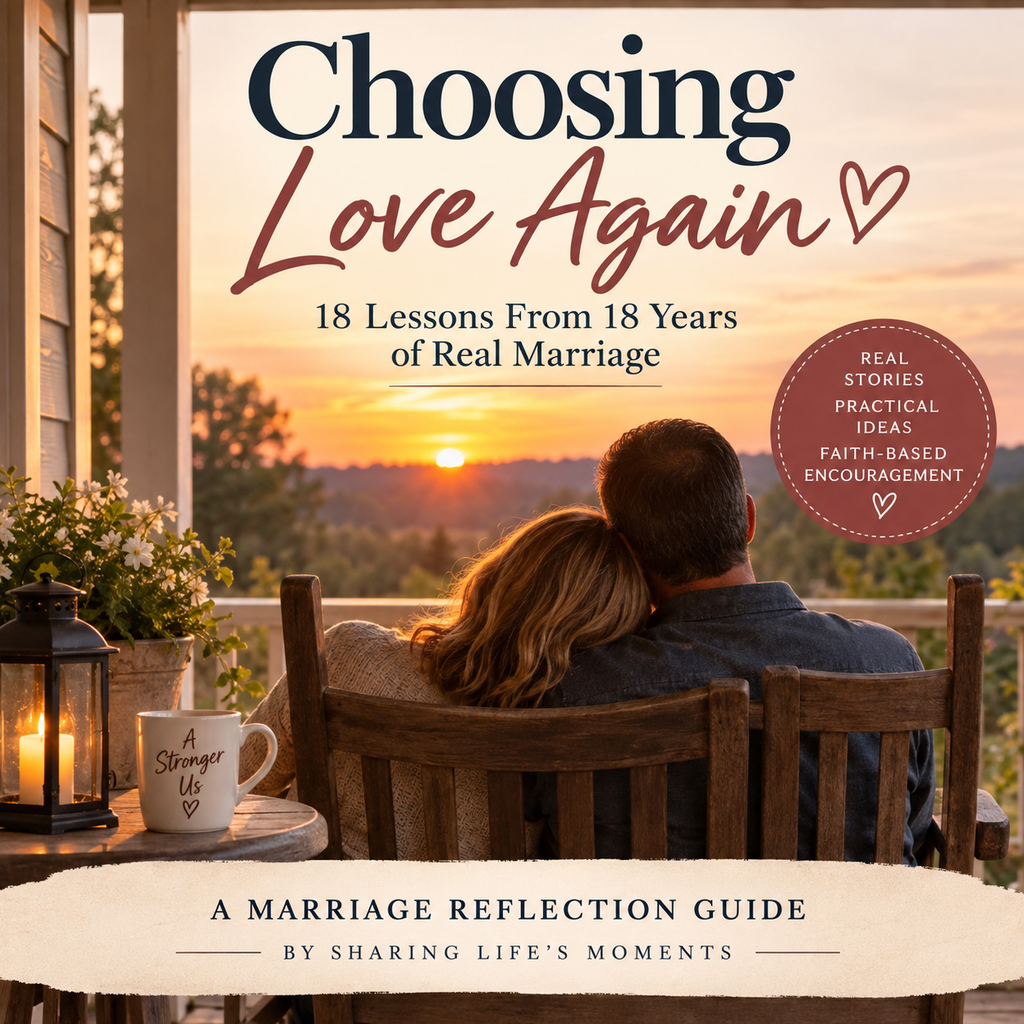
Ready to Choose Love Again?
Marriage takes more than saying “I do.” It takes choosing each other through every season of life. After 18 years of marriage, I've gathered 18 lessons into Choosing Love Again, a 25-page reflection guide filled with real-life experiences, practical tips, thoughtful questions, and faith-based encouragement. If your marriage could use a little more connection and understanding, this guide is a place to start.
Click here to get your copy.
Let's Talk About Marriage Advice
I'm curious about the advice you've received from the people who have been married much longer than you.
What's the best marriage advice your grandmother, mother, or another happily married couple ever shared with you?

Marriage Advice for Wives: Wisdom From My Grandmother

When Hearing Loss Starts Affecting Communication in Your Marriage

When Chronic Health Struggles Test Your Marriage

Tough Conversations Every Couple Needs to Have Early

Choosing Love in Marriage: The More I Love My Husband, the More My Own Heart Is Changing